Tutorials
The CSSTC 2026 tutorial program features presentations by experts from the Canadian semiconductor community. These tutorials will be included with conference registration.
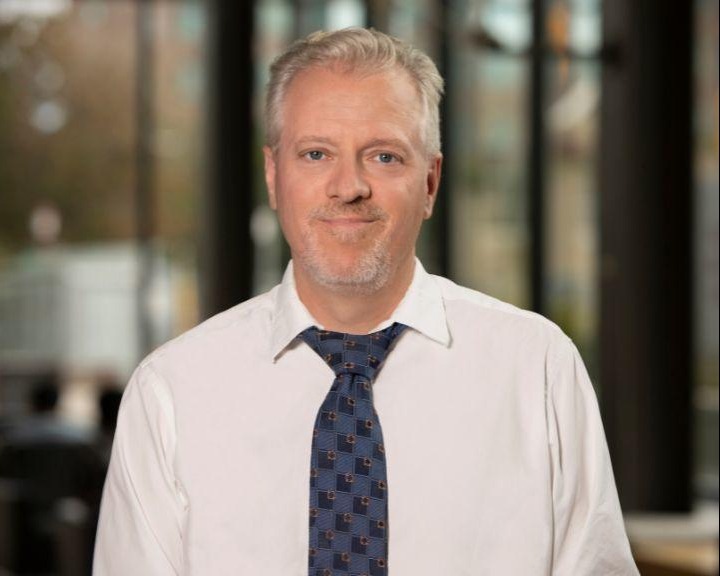
Pierre Berini, University of Ottawa
Nanofabrication Techniques in Nanophotonics
Nanophotonics involves materials that are structured to dimensions well-below the optical wavelength, reaching into the nanoscale for operation in the visible and near-infrared spectral regions. Accessing the nanoscale requires lithography tools and techniques that can operate beyond the optical diffraction limit (which restricts photolithography), such as electron beam lithography. Electron beam lithography techniques can be applied in deposition/etch or deposition/lift-off processes. Focused ion beams can also be used to expose resists, in addition to directly milling materials. Nanoscale metrology techniques are required to verify and characterize fabrication steps, such as scanning electron beam microscopy, atomic force microscopy, and He ion microscopy. A wide range of materials are of interest in nanophotonics, including dielectrics (silicon dioxide, silicon nitride, polymers), semiconductors (Si, InP, GaAs), and metals (Au, Cu, Al), which must also generally be structured at the nanoscale. Nanostructures of general interest include plasmonic antennas, metal or dielectric metasurfaces, and photonic crystal structures. These topics will be introduced and reviewed in this tutorial.
Detailed analysis will be provided during the tutorial.
Pierre Berini (F’11) received his Ph.D. and M.Sc.A. degrees in Electrical Engineering from École Polytechnique de Montréal, Canada, and his B.E.Sc. and B.Sc. degrees in Electrical Engineering and Computer Science, respectively, from the University of Western Ontario, Canada. Dr. Berini is a Distinguished University Professor of Electrical Engineering and of Physics at the University of Ottawa. He is also the Canada Research Chair (T1) in Nanophotonics, former Director of the Centre for Research in Photonics at the University of Ottawa, and founding Director of the uOttawa NanoFab which is a core facility housing >$30M in cleanroom tools. He was the Founder and Chief Technology Officer of a venture capital financed company and he collaborates on an ongoing basis with industry.
Dr. Berini has received an NSERC Steacie Fellowship, an NSERC Discovery Accelerator, a Premier of Ontario Research Excellence Award, the University of Ottawa Young Researcher of the Year Award, an URSI Young Scientist Award, a George S. Glinski Award for Excellence in Research, and is a Canada Foundation for Innovation researcher. Dr. Berini is a Fellow of the IEEE, a Fellow of Optica, a Fellow of the APS, a Fellow of the Canadian Academy of Engineering, and a Fellow of the Royal Society of Canada. He has published 14 book chapters, >700 scientific and technical papers in peer-reviewed periodicals and conference proceedings, and is an inventor or co-inventor of 27 patents. He was an Associate Editor of Optics Express, a Managing Editor of Nanophotonics, and an Associate Editor of Optica. He contributes on an ongoing basis to the organization of several international conferences in photonics. His research interests span the field of nanophotonics for application to telecom and quantum devices, (bio)sensors, and security features.
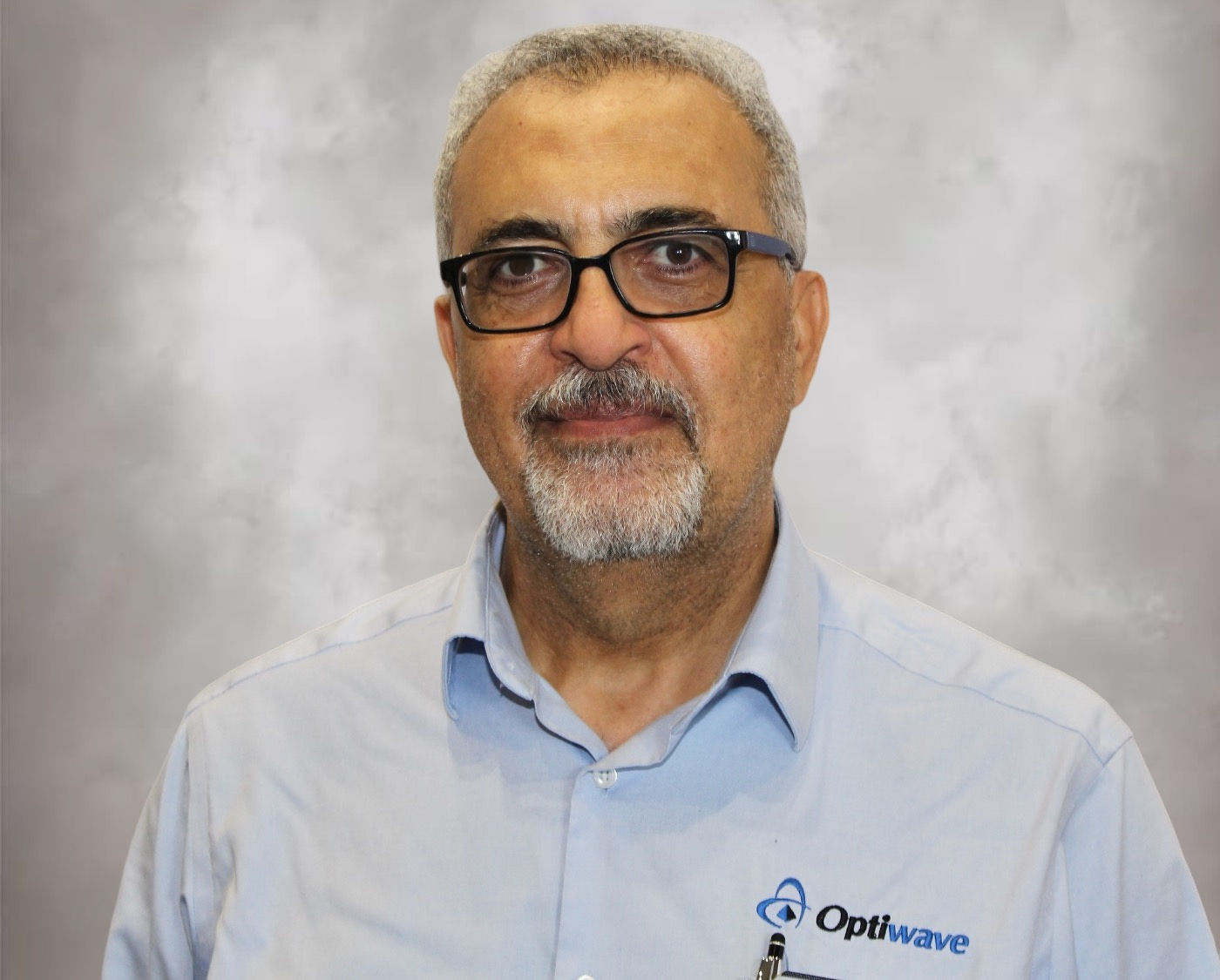
Ahmad Atieh, Optiwave Systems, Inc.
System Characterization of Photonic Integrated Circuits Is a Must for Commercial Deployment
The deployment of photonic integrating circuits (PICs) is increasing every year in many applications including telecom, datacenters, quantum, sensors, etc. The need to characterize PICs in layouts that mimic the deployed systems is essential ahead of operating these systems to avoid unpredicted performance issues. Characterization in a simulation platform allows investigating PICs performance under severe conditions that are difficult to predict during operation. Such conditions include weather and turbulence conditions, nonlinear effects, distortion, noise, temperature, etc. In addition, characterization of PICs with other devices and modules in the same layout is crucial to produce system budgets and tolerances.
Optiwave Systems Inc offers OptiSystem software tools that allow adding models of PIC devices either through process design kit (PDK) or optical S-parameter matrix. The PDK may be created based on analytical models or measured data of the PIC offered by fabrication centers. On the other hand, optical S-matrix provides another means to model PIC in OptiSystem software. Also, GDS-II mask of the PIC can be used to provide the S-matrix of the device using other software packages at Optiwave.
OptiSystem software has over 625 components and visualizers to design different systems for many applications enabling full characterization of the PICs. The software supports optical signal transmission over different channels including single mode and multimode fibers, multicore fibers, optical wireless channels such as free-space, underwater and satellite. Two examples, including four-ring demultiplexer and four-by-four cross connect switch PIC devices designed using Luceda IPKISS software are characterized in OptiSystem software. The netlists of those devices are loaded to a component in OptiSystem dedicated for the co-simulation between OptiSystem and IPKISS software packages.
Detailed analysis will be provided during the tutorial.
Ahmad Atieh received his Ph.D. degree in Electrical Engineering from the University of Ottawa in 1997, M.Sc. degree in Electrical Engineering from Jordan University of Science and Technology in 1987 and B.Sc. degree in Electrical Engineering from Yarmouk University, Jordan, in 1985. His current research interests are in the fields of optical fiber communication systems including optical fiber characterization, optical amplifiers, nonlinear fiber optics, and optical communication transmission systems, as well as in free-space optical communication systems.
Dr. Atieh has contributed more than 200 technical papers in different refereed journals and conferences and holds over 35 issued patents and patents pending. He has held positions at the National Research Council Canada, JDS Uniphase Inc, BTI Systems Inc in Canada, Taibah University in Madinah, Saudi Arabia, and Jordan University in Amman, Jordan. He is currently Vice President at Optiwave Systems Inc. and Adjunct Professor at the University of Ottawa.